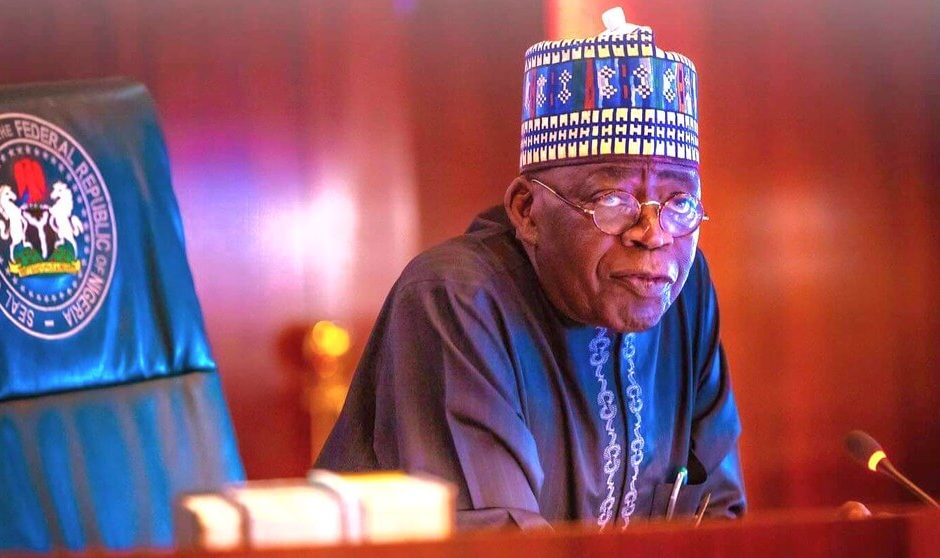

Bola Ahmed Tinubu, Nigeria’s renowned politician who was elected in a keenly contested presidential election in March, 2023, was sworn in as the 16th President and Commander-in-Chief of the Armed Forces of the West African country on May 29th, 2023. Tinubu, 72, came into the saddle at a time the country of nearly 250 million inhabitants, mostly children and youths under the age of 40 were grilling under severe economic, social and political discomforts and unease thereby yearning for hopes of immediate reliefs. Tinubu’s manifesto of “Renewed Hopes,” even though many among the country’s elites and urban dwellers had passed it off as political cajoles, gimmicks and fallacies conjured to deceive and hoodwink unsuspecting Nigerians merely to snatch power, may have earned him the edge over his closest rivals – Atiku Abubakar of the People’s Democratic Party, PDP and Peter Gregory Obi of the Labour Party, LP, who came second and third respectively after the ballots.
The journey of the last one year therefore is a milestone that evokes reflections and stocks taking. Interestingly, the Tinubu Government, realizing the significance of its first one year in office, rolled out the drums, in what it termed a low key celebration, but intended to present its one-year score card to the Nigerian masses who hired him one year ago. The Tinubu’s one-year administration is without a doubt an eventful period and characterized by mixed feelings, views and opinions among Nigerians and distant observers. For one, it can be described as perhaps the most critical times in the annals of the Nigerian economy vis-à-vis its economic and social policies’ reforms.
For instance, the infamous “fuel subsidy is gone” proclamation of May 29th, 2023, at the Eagle Square, Abuja, venue of his presidential inauguration will ever remain fresh in the memories of many Nigerians. As the bleeding from the subsidy removal continued unabated from that major inaugural pronouncement, the Jagaban, as he is fondly referred, added an icing to the sweet-bitter cake already served his fellow country men and women by liberalizing the foreign exchange, called the floating of the naira. These two policies sparked a major storm in the economy and there’s yet to be seen any sign of its abating. But Tinubu’s die hard supporters, admirers, followers and political mentees believe these policies are bold steps by the courageous Lion of Bourdillon aimed at transforming Nigeria and finally setting the most populated blacks’ country on the path to progress and prosperity. In spite of the challenges faced by many Nigerians, the pro-Tinubu apologists are unrelenting in their postulation that the administration has ushered in a new era of hope and progress by taking bold steps towards ensuring the actualization of his government’s Renewed Hope Agenda.
Among other things, the protagonists of the government are quick to point at the eight-point agenda of Mr. Tinubu’s administration, which include: reforming the economy for inclusive growth; strengthening national security; boosting agriculture for food security; unlocking energy and natural resources; enhancing infrastructure and transportation; boosting education, health, and social investment; accelerating diversification through industrialization, digitization, creative arts, manufacturing and innovation and; improving governance for effective service delivery.
On the economy, the Tinubu government has justified the subsidy removal as a tough decision that needed to be taken in the interest of the collective good, describing the fuel subsidy regime as a Venus flytrap which was taking a large chunk of the nation’s gross domestic product, GDP, in excess of S10 billion annually and therefore, unsustainable. The removal has therefore freed up capital which is being redirected to critical sectors like healthcare, education, infrastructure and security. More so, it says the fuel subsidy removal has led to a 50% reduction in petrol importation and increased funds to states and local governments, this is as the administration also took steps to cushion the effects of the subsidy removal on the more vulnerable citizens through the payment of N35,000 to civil servants for six months, consideration of a new minimum wage for workers, the establishment of an infrastructure support fund for states and the launching of a N100 billion CNG-bus programme for mass transit, among others.
The naira floatation policy was also described as a necessary step to end foreign exchange subsidy and set the economy on a strong trajectory of growth. The clamp down and streamlining of Bureau de Change (BDC) operations and lifting of FOREX restrictions on certain imports were described as embedded in the comprehensive economy renewal process. Also related to this is the Central Bank of Nigeria, CBN’s, settling of the backlog of foreign exchange forwards worth $7.5 billion. These, it is believed has enhanced the performance of the Nigerian Stock Exchange, making it one of the world’s best performing stocks as of April, 2024. President Tinubu has also established a Presidential Fiscal Policy and Tax Reform Committee aimed at reforming tax systems and reduce the tax burden on Nigerians. Also geared towards economic renewal and sustainable growth is the President’s international engagements aimed at gaining foreign direct investments, partnerships and ambitious marketing of Nigeria’s vast opportunities which have seen over $30 billion worth of investments in key sectors of the economy.
Across various other sectors covered by the 8-point agenda, from national security to agriculture and food security, energy and natural resources, infrastructure and transportation, education, health and social investments, youth empowerment, innovation to improved governance for effective service delivery, the Tinubu administration is said to have made significant changes and repositioning Nigeria for rapid growth and development. They concluded by submitting that it is only a matter of time before the Nigerian people begin to see the positive impacts of the Tinubu reforms and critical policy overhaul.
Until then, congratulations to Mr. Tinubu and his team on the successful completion of one year in office and to the surviving masses of Nigeria under the severity of these critical reforms.