
Nigeria is in the league of poor and underdeveloped countries of the world, and pundits have often been quick to point out that one of the factors responsible for the country’s developmental woes is the poor standards of her educational system. No nation, experts argue, can be better than the quality of its education.
There is no more convincing proof of this saying than the fact that global ratings or rankings of universities have often seen the topmost 500 emerge from the most economically advanced climes of Europe, America and recently Asia, with only very few universities from African countries like South Africa and Egypt. No Nigerian university ever made the list of top 1000 universities in the world and a few struggle to be named in the list of the top 500 in Africa, far behind their counterparts in South Africa, Egypt, Tanzania, Morocco and Tunisia.
In a move to arrest the rot in the education sector, the Education Tax Act No7 of 1993 was promulgated, alongside other education-related Decrees in January 1993. The ETF established by the Act No7 of 1993 was however amended by Act No 40 of 1998 (which was replaced by the Tertiary Education Trust Fund Act No 16 of 2011). The new Act therefore refocuses the mandate of the Fund as an intervention agency set up to provide critical supports to all levels of public tertiary institutions with the main objective of using funding alongside project management for the rehabilitation, restoration and consolidation of Tertiary Education in Nigeria.
The initial source of income available to the Fund is the 2 percent education tax paid from the assessable profit of companies registered in Nigeria. However, the Tax was reviewed upwards to 2.5 percent by the Finance Act 2021 and further increased to 3 percent by the Finance Act 2023, effective September 2023. The funds are disbursed for the general improvement of education in federal and state tertiary educational institutions specifically for the provision or maintenance of: essential physical infrastructure for teaching and learning; institutional material and equipment; research and publications; academic staff training and development and; any other need which, in the opinion of the Board of Trustees, is critical and essential for the improvement and maintenance of standards in higher educational institutions.
The Fund is managed by an eleven-member board of trustees while its day to day management is entrusted in the hands of an Executive Secretary as the Chief Executive Officer, CEO. Over the years, the agency has been led by some of the best minds and brains in the country among the top educational brass, managers and technocrats as Executive Secretaries. Some of these are: Professor Mahmood Yakubu, the current two-term Chairman of the Independent National Electoral Commission, INEC; Aliyu Naiya, who led the agency in acting capacity; Mallam Tijani Ahmed Abdukadir; Dr. Abdullahi Baffa and; Professor Suleiman Elias Bogoro. But on March 2, 2022, however, former President Muhammadu Buhari appointed a seasoned technocrat, Arc. Sonny Echono as Executive Secretary of the Fund.
If the TETFund had been thought to have made any significant impacts and thus basking in the euphoria of its past achievements, the coming of Echono has been challenging the status-quo and redefining the mission and purpose of the agency in line with the very critical reforms of the new administration of President Bola Ahmed Tinubu.
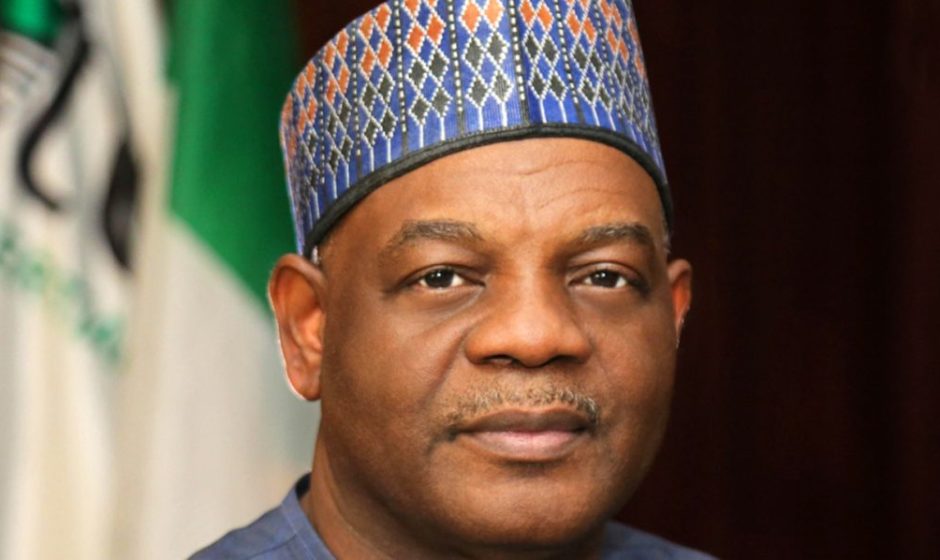
Sunday Sylvia Togo Echono, OON, born on 16 December, 1962, is an Architect by training, who previously served as the Secretary of the Admissions Committee of the Nigerian Institute of Architects and the 28th President of the Nigerian Institute of Architects from 2019 to 2021. He served as the Permanent Secretary of the Federal Ministry of Agriculture from 2014 to 2016; Federal Ministry of Communications from 2016 to 2017 and; Federal Ministry of Education from 2017 until his retirement in 2022. He therefore came brimming with technocratic expertise and experience, having worked in the highest rung of the bureaucratic system in Nigeria. In the last two years of his leadership of the Fund, Arc. Sonny Echono can be implicated for massive revolution in the agency’s activities and operations; bringing significant transformations across the nation’s tertiary education landscape. Arc. Echono has prioritized infrastructure development, equitable access, content creation, research, innovation and more importantly, accountability and plugging of leakages in the system.
Poised to reconstruct a new narrative, Arc. Echono’s commitment on improving physical infrastructure, thus creating an inspiring environment for learning as well as promoting research, has led to ground breaking researches and innovations such as the “Chord Hearing Device.” The ES has led TETFund to forge strategic partnerships with world class institutions such as the University of Brazil, for the training of Nigerian professionals in Agriculture, secured transnational cooperation with the government of Britain, Forum for Agricultural Research in Africa, Nigerian Economic Summit Group and the African Union in areas of research and collaboration geared towards the growth and development of tertiary education in Nigeria.
In addition to these, Echono’s TETFund initiated the Digitalization Project Steering and Coordinating Committee, a remarkable effort aimed at creating a vital national research bank. The ambitious endeavor will ensure the establishment of a comprehensive repository for academic works, thus enhancing access to valuable research resources. By embarking on the project, the TETFund under Echono has demonstrated commitment to embracing technological innovation with a view to streamlining academic processes and enhance knowledge sharing. But beyond building physical infrastructure, training and developing staff capacity, one of the greatest revolution of the Echono-led TETFund in the annals of the Nigerian tertiary institutions will most likely be its efforts at building employable graduates and helping fresh graduates secure jobs as a way of addressing mass youth unemployment in the country. The agency has committed to this initiative by implementing the recommendations from its Graduate Employability Benchmark programme conducted in partnership with the International Finance Corporation, IFC, to reduce unemployment in Nigeria.
This initiative was motivated by the report of the IFC on Nigerian educational institutions, which showed that the aggregate average score of Nigerian benchmark institutions across the five dimensions of employability which includes: relevance of learning, governance and strategy, employer engagement, career services/guidance and, alumni management stood at 2.3 out of 4.0. This means a little above 2.2 which represents the average of institutions benchmarked globally. It is indeed, a deliberate effort at refocusing its intervention schemes by the Fund to support learning outcomes and employability of Nigerian graduates. The initiative came on the heels of an approval by the Federal Ministry of Education of a strategic operation plan to refocus TETFund entrepreneurship intervention for employability and innovation. What Nigerians and key stakeholders in the education industry therefore need to do is to provide needed support for Echono to do more and better. He appears to have more in his kitty and beaming with so much energy, zeal and capacity to take the still underdeveloped educational system to a place of pride. President Bola Tinubu and his Minister of Education, Professor Tahir Mamman, should also explore options of a better and increased funds for the agency, while Arc. Sunny Echono and his team at TETFund must ensure equitable access for a holistic transformation of the vital education sector in Nigeria.